February 02, 2026
A Blueprint for Cybersecurity Success: Blended Learning and Real-World Impact
Nitin Sukhija, Ph.D, M.B.A
Professor, Department of Computing and Security, Slippery Rock University
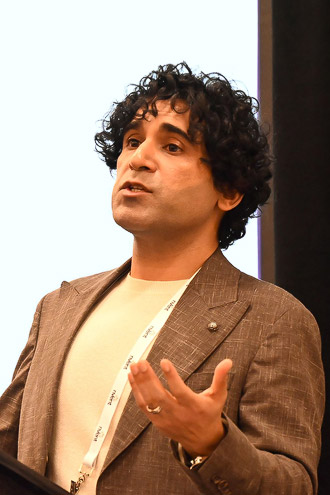 Self-motivation, curiosity, and resilience are vital qualities for students to succeed
in cybersecurity. This broad field focuses on ensuring the availability, integrity,
and confidentiality of information systems and networks against various threats, including
attacks, accidents, and failures. The primary goal of cybersecurity is to protect
operations and assets by employing a range of technologies, processes, and policies.
As our reliance on internet applications and systems grows, alongside the emergence
of complex technologies and cyber infrastructures that can be difficult to secure,
the importance of cybersecurity becomes even more critical. Furthermore, cybercriminals
are continually adapting to these advancements by using automated, coordinated, and
sophisticated methods to carry out cyberattacks that range from minor data breaches
to large-scale disruptions.
Self-motivation, curiosity, and resilience are vital qualities for students to succeed
in cybersecurity. This broad field focuses on ensuring the availability, integrity,
and confidentiality of information systems and networks against various threats, including
attacks, accidents, and failures. The primary goal of cybersecurity is to protect
operations and assets by employing a range of technologies, processes, and policies.
As our reliance on internet applications and systems grows, alongside the emergence
of complex technologies and cyber infrastructures that can be difficult to secure,
the importance of cybersecurity becomes even more critical. Furthermore, cybercriminals
are continually adapting to these advancements by using automated, coordinated, and
sophisticated methods to carry out cyberattacks that range from minor data breaches
to large-scale disruptions.
Given this ever-evolving landscape, I have found that blended learning has significantly
improved student outcomes in my classroom. This dynamic approach connects theoretical
concepts with real-world applications in computing and cybersecurity, creating an
engaging learning environment. It aligns perfectly with the PASSHE mission, emphasizing
collaboration between employers and universities and enriching the student experience.
Ultimately, this strategy enhances student engagement and success while actively contributing
to the development of a skilled workforce.
As a key component of this strategy, students participate in real-world projects that encourage collaboration with peers to apply software development life-cycle processes and methodologies, including artificial intelligence, to identify common programming errors and evaluate software testing tools. This project-centric approach consists of multiple phases for designing and implementing software assurance practices. As a result, students gain hands-on experience, integrating AI into their projects—ranging from coding to theoretical threat modeling—using real or synthetic datasets for pattern recognition and automated defense.
Beyond these crucial technical capabilities, other skills are critically important for students’ long-term success, especially in today’s rapidly advancing technological landscape, where adaptability and continuous upskilling are as vital as technical skills. These other skills help students build analytical foundations, foster relationships, and develop leadership abilities, enabling them to make strategic decisions to overcome complex real-time challenges. Consequently, this makes them more resilient in the face of industry demands and changes.
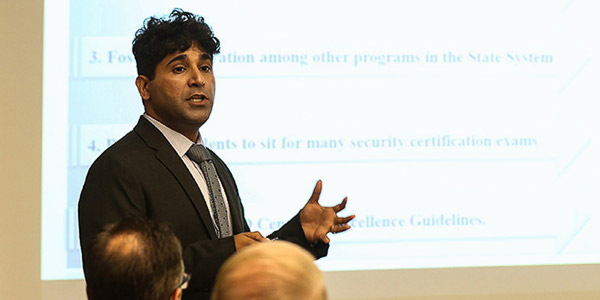 These vital skills are further refined and put into practice through Slippery Rock
University’s Center for Cybersecurity and Advanced Computing (C2AC), launched in 2018,
which addresses issues related to cybersecurity and high-performance computing through
collaborative research and interdisciplinary academic initiatives. We encourage students
to seek mentorship and participate in research and events. Thus far, they have gained
invaluable experiences that are often unique for undergraduate students.
These vital skills are further refined and put into practice through Slippery Rock
University’s Center for Cybersecurity and Advanced Computing (C2AC), launched in 2018,
which addresses issues related to cybersecurity and high-performance computing through
collaborative research and interdisciplinary academic initiatives. We encourage students
to seek mentorship and participate in research and events. Thus far, they have gained
invaluable experiences that are often unique for undergraduate students.
Through this comprehensive journey, students learn to apply effective principles to achieve their goals—skills essential to cybersecurity professionals. We continuously update our curriculum to reflect impactful learning objectives and workforce development standards that are highly sought after in both the private and public sectors, within the state and across the nation.
SRU’s cybersecurity program bridged the gap between theory and practice for me. Between
the comprehensive curriculum—covering malware analysis and risk assessment—and the
opportunity to compete in the DOE CyberForce® challenge, I’ve gained a massive competitive
edge. The combination of classroom learning, club collaboration, and my internship
has been the defining factor in my professional development.”
— Liam McElligott ’26